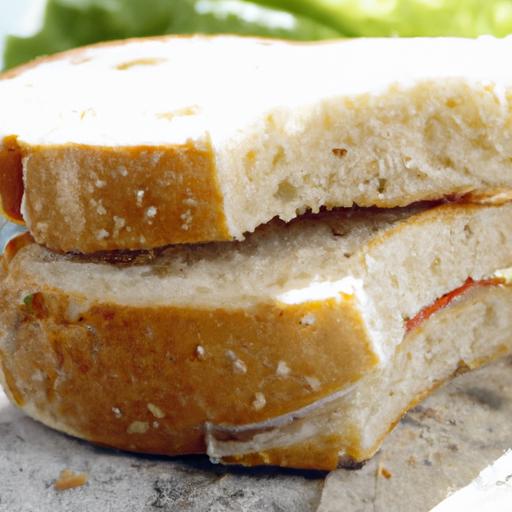


There’s something undeniably satisfying about slicing into a freshly baked loaf of bread-its golden crust giving way to a soft, tender crumb that promises countless sandwich possibilities. While store-bought bread may offer convenience, nothing quite matches the flavor, texture, and pride that come with baking your own at home. In this article, we explore the ultimate recipe for perfect homemade bread, designed to be the ideal base for any sandwich creation. Whether piled high with deli meats, layered with garden-fresh veggies, or spread simply with butter, this recipe strikes the balance between ease and excellence, inviting both beginners and seasoned bakers to elevate their sandwich game from ordinary to remarkable.
Choosing the Ideal Flour for a Soft and Flavorful Crust
Perfect homemade bread begins with the right flour selection,the foundation of a soft and flavorful crust that delights with every bite. For an ideal sandwich base,opt for bread flour which boasts a higher protein content (usually 12-14%) compared to all-purpose flour. This is essential for gluten development,giving your dough excellent elasticity,a tender crumb,and a crust that’s crisp yet yielding.
If you desire a slightly lighter texture, a combination of bread flour and all-purpose flour works beautifully, balancing strength with softness. For a bit of rustic depth, adding a small proportion of whole wheat or rye flour can introduce subtle nutty flavors and a heartier bite.However, keep these additions under 20% of total flour to maintain that classic sandwich bread softness.
Mastering the Art of Dough Kneading and Proofing
The journey to perfect homemade bread hinges on expertly handling your dough. Kneading activates gluten, the protein network that traps air and helps your loaf rise with a tender crumb and uniform structure. Using the classic fold-and-push method, knead for 8-10 minutes until the dough is smooth, elastic, and slightly tacky but not sticky.
Proofing is where dough transforms. allow the dough to rise in a warm, draft-free environment until it doubles in size, usually 1 to 1.5 hours. To test readiness, gently press a finger into the dough: if the indentation springs back slowly, it’s perfectly proofed. Under- or over-proofing can affect texture and rise, so watch closely to achieve the ideal airy softness for your sandwich bread.
Baking Techniques to Achieve the perfect Sandwich Texture
Achieving the perfect sandwich bread texture is a balancing act between crust and crumb. Bake in a preheated oven at 375°F (190°C) to foster a soft crust with slight golden bronzing.Placing a small oven-safe dish with water creates steam, which helps develop a tender but well-formed crust that doesn’t toughen.
Remove your loaf promptly once the internal temperature hits 190°F (88°C) to avoid dryness. Cooling on a wire rack is critical-this prevents condensation, preserving your loaf’s fluffy interior and soft crust. when sliced, your bread should yield slightly under pressure yet hold shape, perfect to cradle your favorite sandwich fillings without crumbling.
Tips for Storing and Refreshing Your Homemade Bread
To keep your perfect homemade bread fresh, wrap it tightly in a clean cotton kitchen towel and store at room temperature in a bread box or paper bag to maintain moisture balance. Avoid plastic bags unless freezing, as condensation can soften the crust undesirably.
If the bread begins to stale, refresh it by lightly misting with water and warming in a 350°F (175°C) oven for 5-7 minutes. This reawakens the crumb and lightly crisps the crust, making each sandwich feel freshly made. For longer storage, freeze sliced bread in airtight bags and toast directly from frozen for convenience without compromising the signature softness and flavor.
Prep and Cook Time
- Prep Time: 30 minutes
- First Rise: 1 to 1.5 hours
- Second Rise: 45 minutes
- Baking Time: 30-35 minutes
- Total Time: Approximately 3 hours
Yield
One standard loaf, sliced into 12 sandwich-sized pieces
Difficulty Level
Medium – ideal for bakers ready to refine essential bread-making skills
Ingredients
- 3 ½ cups bread flour, sifted
- 1 cup warm water (110°F/43°C)
- 2 tsp active dry yeast
- 2 tbsp granulated sugar
- 1 ½ tsp salt
- 2 tbsp unsalted butter, softened
- Optional: ½ cup whole wheat flour for partial substitution
Instructions
- Activate Yeast: In a small bowl, dissolve sugar and yeast in warm water. Let it bloom for 5-10 minutes until frothy.
- Mix Dry Ingredients: In a large mixing bowl, whisk together bread flour and salt.
- Combine: Pour the yeast mixture and softened butter into the flour. Stir with a wooden spoon until a shaggy dough forms.
- Knead: Turn dough onto a lightly floured surface. Knead 8-10 minutes using the fold-and-push technique until smooth and elastic. Handle with care, avoid adding too much flour.
- First Proof: Place dough in a lightly oiled bowl, cover with a damp cloth, and let rise in a warm spot until doubled in size (about 1 to 1.5 hours).
- Shape: Punch down dough gently and shape into a loaf. Place in a greased 9×5-inch loaf pan.
- Second Proof: Cover and let rise until nearly doubled, about 45 minutes.
- preheat Oven: Set oven to 375°F (190°C). Place an oven-safe pan with water on the lower rack to create steam.
- Bake: Bake the loaf for 30-35 minutes or until golden brown and the internal temperature reaches 190°F (88°C).
- Cool: Remove from pan and cool wholly on a wire rack before slicing to ensure perfect texture.
Tips for Success
- Gluten Test: Perform the windowpane test during kneading-stretch a small dough piece until thin and translucent without tearing. This confirms proper gluten development.
- Temperature Matters: Keep water warm, not hot, to avoid killing yeast.
- Variations: Substitute olive oil for butter for a lighter crumb and subtle flavor change.
- Freeze slices: For longer shelf life, slice and freeze bread, thawing slices as needed.
- Even Rise: If dough is slow rising, create a warm (not hot) environment by placing it inside an oven with just the light on.
Serving Suggestions
This bread shines as the canvas for classic deli sandwiches, grilled cheeses, or open-faced toasts. Slice thick for hearty favorites like turkey and avocado or thin for delicate cucumber and cream cheese. Garnish with fresh herbs, a light spread of butter or flavored aioli to elevate the experience.

| Nutritional Information (per slice) | Calories | Protein | Carbs | Fat |
|---|---|---|---|---|
| approximate | 140 | 5g | 28g | 2g |
For a deeper dive into artisan bread techniques, check our detailed artisan bread guide. For science-backed baking tips, visit the King Arthur Baking School.
Q&A
Q&A: Perfect Homemade Bread – The Ultimate Sandwich Base Recipe
Q: Why make homemade bread when store-bought is so convenient?
A: Homemade bread offers freshness and flavor unmatched by store brands. Plus, you control the ingredients-no preservatives or hidden additives. It’s a rewarding process that fills your kitchen with an irresistible aroma!
Q: What makes this bread recipe the “ultimate” sandwich base?
A: This recipe strikes the perfect balance of soft crumb and sturdy crust, so it holds up well to an array of fillings without falling apart. Its mild flavor complements everything from deli meats to veggies and spreads.
Q: How challenging is it to bake this bread at home?
A: Surprisingly simple! The recipe uses basic ingredients and straightforward techniques. Even beginners can succeed with a little patience and care. No fancy equipment needed-just a mixing bowl,loaf pan,and oven.
Q: Can I customize this bread recipe?
A: Absolutely! Add herbs, seeds, or whole grains for a personal touch. You can experiment with different flours-like whole wheat or spelt-to vary texture and taste while retaining its sandwich-worthy qualities.
Q: How long does it take from start to finish?
A: Including rising time, plan for about 3 hours.Most of that is hands-off fermentation. Actual kneading and shaping take less than 20 minutes, and baking is around 30-40 minutes.
Q: What’s the best way to store this bread?
A: Store at room temperature in a breathable container like a paper bag or cloth wrap to maintain crustiness. For longer storage, slice and freeze-you can toast slices directly from frozen for fresh taste.
Q: Can this bread be made gluten-free?
A: This particular recipe relies on gluten for structure, so a gluten-free version would require alternative flours and binding agents. However, many gluten-free bread recipes exist if you need that option.
Q: What tips improve the bread’s texture and rise?
A: Use warm water to activate yeast, knead thoroughly to develop gluten, and allow the dough to rise in a warm, draft-free spot. Avoid rushing the fermentation-the longer, slower rise enhances flavor and texture.Q: Is this bread suitable for sandwiches beyond the usual lunchbox fare?
A: definitely. Its neutral but flavorful profile makes it great for gourmet sandwiches, breakfast toast, or even as a base for bruschetta. Versatility is one reason it’s called the ultimate sandwich bread!
Q: What inspired this recipe?
A: A desire to craft bread simple enough for everyday bakers, yet robust enough to elevate any sandwich. It combines timeless baking principles with a modern twist, celebrating homemade goodness in each loaf.
Closing Remarks
Baking your own bread transforms a simple sandwich into something truly special-a foundation crafted with care, texture, and flavor that store-bought loaves can rarely match. with this ultimate homemade bread recipe in your kitchen repertoire, you’re not just making sandwiches; you’re creating edible experiences that start with the perfect base. So next time hunger calls, remember: the best sandwiches begin with the warm, inviting aroma of bread made from scratch. Happy baking!