
Every year, as winter’s chill begins to fade and communities gather to celebrate, a colorful and delicious tradition takes center stage: the King Cake. More than just a pastry, this festive treat carries with it a rich tapestry of history, symbolism, and shared joy. From its vibrant icing to the hidden treasures baked within,the King Cake ritual invites participants to partake in a timeless ceremony of unity and party. In exploring the sweet tradition behind this iconic cake, we uncover the cultural threads that have woven it into the heart of holiday festivities around the world.
The sweet tradition behind the festive King Cake ritual invites us to explore a vibrant tapestry of history,culture,and culinary artistry. Originating from Europe and embraced wholeheartedly by Louisiana’s Mardi Gras celebrations, this beloved cake symbolizes unity, joy, and prosperity-making it an essential centerpiece during the holiday season. Each colorful swirl, hidden trinket, and aromatic spice reveals layers of meaning and connection across generations. Whether you’re a seasoned baker or a festive foodie, understanding the symbolism and hosting a memorable King Cake celebration elevates the experience into a shared moment of delight.
Prep and Cook Time
- Preparation: 40 minutes
- Rising Time: 1 hour 30 minutes
- Baking Time: 25-30 minutes
- Total Time: Approximately 2 hours 40 minutes
Yield
Serves 10-12 generous slices
Difficulty Level
Medium-ideal for bakers agreeable with yeast dough and icing techniques
Ingredients
- for the Dough:
- 4 cups all-purpose flour, sifted
- 1/2 cup granulated sugar
- 2 1/4 tsp active dry yeast (1 packet)
- 1 tsp salt
- 1 cup whole milk, warmed (about 110°F)
- 2 large eggs, at room temperature
- 1/2 cup unsalted butter, melted and cooled
- 1 tsp vanilla extract
- 1 tsp cinnamon
- For the Filling:
- 1/2 cup brown sugar, packed
- 1 tbsp ground cinnamon
- 1/4 cup unsalted butter, softened
- For the Glaze:
- 2 cups powdered sugar
- 3-4 tbsp fresh lemon juice
- 1 tsp vanilla extract
- food coloring (purple, green, yellow) for sprinkles
- Extras:
- One small plastic baby or trinket to hide inside the cake
Step-by-Step Instructions
- Activate the yeast: In a small bowl, stir the yeast into warm milk with a pinch of sugar.Let sit 5-10 minutes until foamy, indicating the yeast is active.
- Prepare the dough: In a large bowl, combine flour, sugar, cinnamon, and salt. Whisk eggs, melted butter, vanilla, and the activated yeast mixture in a separate bowl.
- Combine ingredients: Gradually add the wet mixture to the dry ingredients. Stir with a wooden spoon or dough hook attachment until a soft dough forms. Knead on a floured surface for 8-10 minutes, until smooth and elastic.
- First rise: Place dough in an oiled bowl, cover with plastic wrap or a clean towel, and let rise in a warm spot for 1-1.5 hours until doubled in size.
- Prepare filling: Mix softened butter, brown sugar, and cinnamon in a small bowl until creamy and evenly blended.
- Roll out the dough: Punch down the risen dough, then roll it into a 16×12 inch rectangle on a lightly floured surface.
- Add filling: Spread the cinnamon sugar mixture evenly over the dough,leaving a small border.
- Form the cake: Tightly roll the dough from the long side into a log. Pinch the seam closed, then form a ring by connecting the ends securely on a parchment-lined baking sheet.
- hide the surprise: Insert the small plastic baby into the bottom of the ring, gently pushing it halfway inside-be cautious not to cut the dough.
- Second rise: Cover the ring loosely and let it rise for 30-45 minutes until puffed but not overproofed.
- Bake: Preheat oven to 350°F (175°C).Bake the King Cake for 25-30 minutes, until golden brown and cooked through.
- Make the glaze: Whisk powdered sugar, lemon juice, and vanilla until smooth and pourable. Adjust consistency if needed.
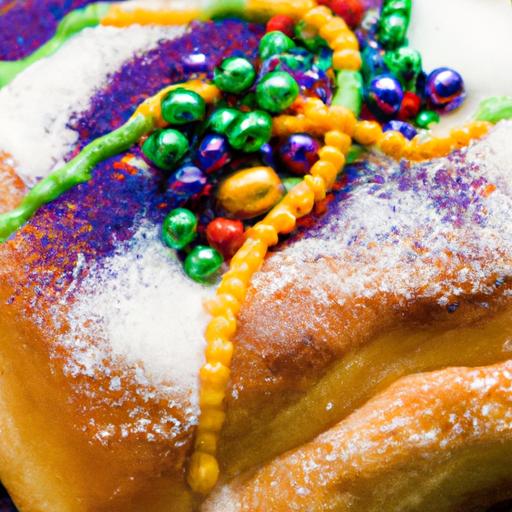
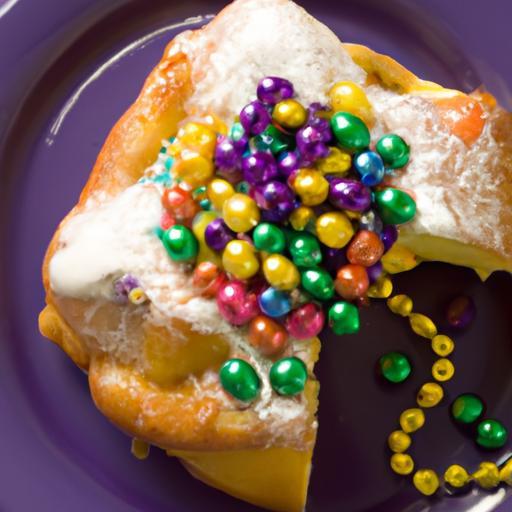
- Decorate: Drizzle glaze over the cooled cake. Sprinkle generously with the traditional Mardi Gras colors-purple (justice), green (faith), and yellow (power).
Tips for Success
- Yeast Activation: Always ensure your milk is warm, not hot, to prevent killing the yeast.
- Dough handling: If dough is sticky, sprinkle lightly with flour but avoid over-flouring to keep it tender.
- Hidden Charm: Wash and coat the plastic baby in vegetable oil to prevent it sticking to the dough.
- Flavor Variation: Incorporate finely chopped pecans or candied citrus peel into the filling for added texture and zest.
- Make Ahead: Bake the cake a day before serving; store tightly wrapped in plastic wrap to maintain freshness.
Serving Suggestions
Slice this festive King Cake into vibrant, eye-catching wedges. Serve on a platter garnished with fresh citrus slices, mint sprigs, or edible gold leaf for an extra touch of celebration. Pair with freshly brewed coffee,hot chocolate,or spiced tea to complement the warm cinnamon and sweet glaze. Encourage guests to find the hidden “king” baby-traditionally, the finder hosts next year’s celebration, enhancing the communal spirit of the ritual.
| Nutrient | Per Serving |
|---|---|
| Calories | 320 kcal |
| Protein | 6 g |
| Carbohydrates | 45 g |
| Fat | 10 g |

Delve deeper into the history of mardi Gras desserts or learn about the cultural impact of King Cake through this insightful National Geographic article.
Q&A
Q&A: The Sweet Tradition Behind the Festive King Cake Ritual
Q: What is the King Cake, and why is it associated with festive celebrations?
A: The King Cake is a colorful, ring-shaped pastry traditionally enjoyed during the Carnival season, notably leading up to Mardi Gras. Its vibrant icing and sugar toppings symbolize the joyous spirit of celebration, while its shape-a circle-represents the unity and continuity of community and the cycle of life.
Q: Where did the King Cake tradition originate?
A: The King cake tradition traces back to medieval Europe, particularly France and Spain, where it was linked to the Feast of the Epiphany, celebrating the visit of the Three Wise Men to the baby Jesus. French settlers brought this custom to Louisiana, where it evolved into the beloved version known today.
Q: What is the significance of the hidden object inside the King Cake?
A: A small figurine, frequently enough a baby representing baby Jesus, is hidden inside the King Cake as a symbolic blessing. Finding the baby is considered lucky and confers various responsibilities, such as hosting the next King cake party or bringing the next cake, fostering community bonds and tradition.
Q: How do people typically celebrate with the King Cake?
A: Friends, families, and communities come together to share the King cake during parties and gatherings throughout Carnival season. The ritual of slicing the cake and discovering the hidden baby adds an element of surprise and fun, creating a sense of anticipation and shared joy.Q: Has the King Cake changed over time?
A: Absolutely. While its core symbolism remains, the King Cake has seen many creative variations-from different fillings like cream cheese or fruit to diverse decorative styles. Contemporary bakers and celebrants frequently enough personalize cakes, blending tradition with modern tastes and artistry.Q: Why does the King cake ritual continue to hold cultural importance today?
A: Beyond being a delicious treat, the King Cake ritual embodies themes of community, celebration, and tradition. It links people to history, faith, and one another through shared experience, making it a living tradition that endures year after year during festive times.
Future Outlook
As the last slice of King Cake is shared and the tiny trinket is discovered, the centuries-old tradition weaves its magic once more-binding friends and family in festive cheer and hopeful anticipation. Beyond its sugary layers and vibrant colors,the King Cake carries a story of celebration,community,and a timeless ritual that continues to flavor the season with joy. Whether savored in the heart of a bustling parade or in the quiet comfort of a family gathering, this sweet custom reminds us all that sometimes, the simplest traditions hold the richest meanings.